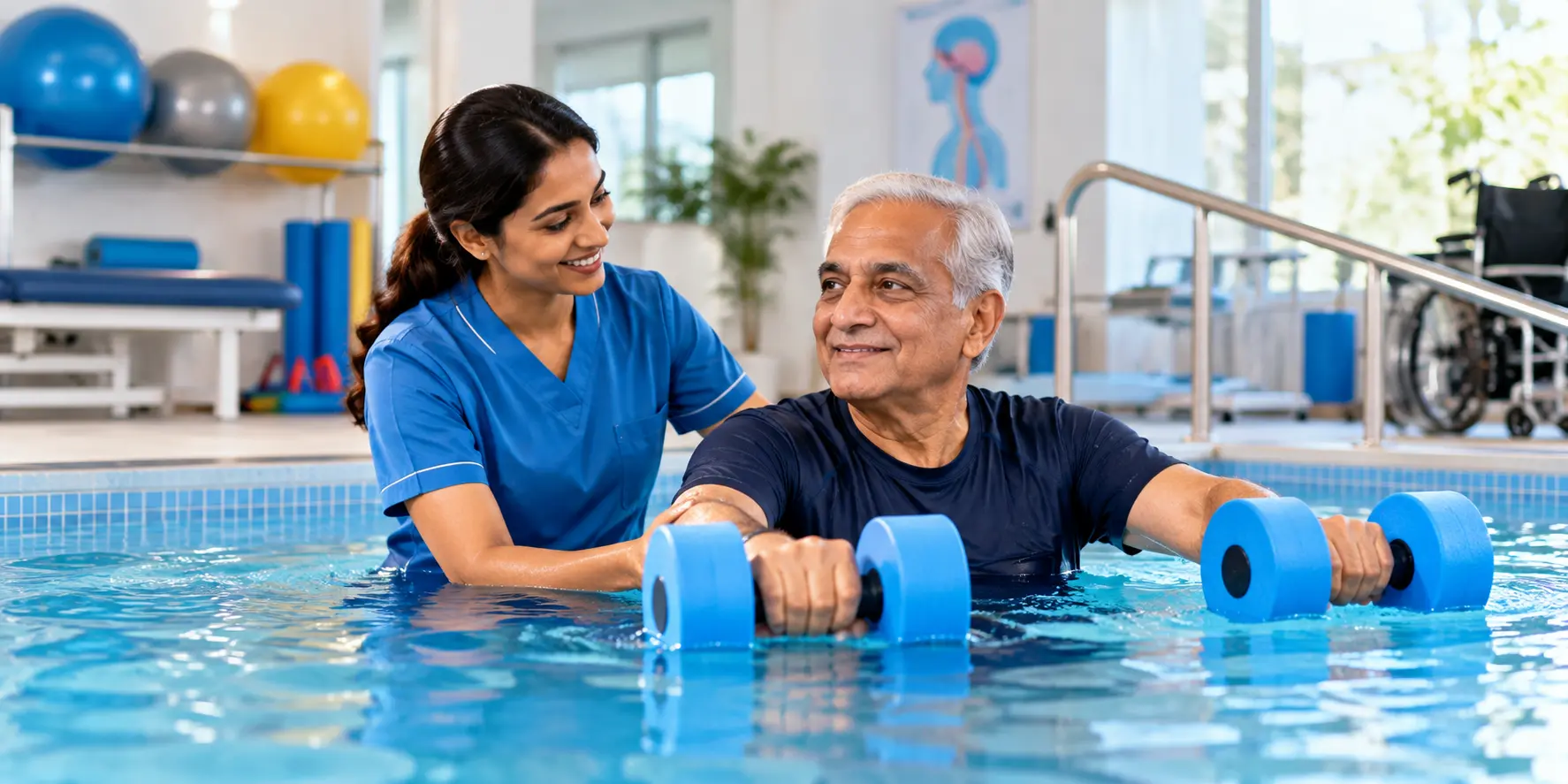
Stroke Rehabilitation with Hydrotherapy: A Safer Path to Recovery
Recovering from a stroke is a journey that requires patience, determination, and the right rehabilitation program. Many stroke survivors experience muscle weakness, balance problems, reduced mobility, stiffness, and difficulty performing everyday activities. While conventional physiotherapy plays a vital role in recovery, hydrotherapy has become an increasingly effective treatment that supports neurological rehabilitation in a safe and comfortable environment.
Hydrotherapy combines therapeutic exercises with the natural properties of warm water, allowing patients to move more freely while reducing stress on their joints and muscles.
What is Hydrotherapy?
Hydrotherapy, also known as aquatic therapy, is a specialized physiotherapy treatment performed in a temperature-controlled therapeutic pool. Warm water provides buoyancy, resistance, and gentle support that help patients perform movements that may be difficult or painful on land.
For stroke survivors, hydrotherapy creates an ideal environment to regain confidence while improving movement and functional independence.
Why Hydrotherapy is Effective After a Stroke
After a stroke, the brain must relearn movement patterns through a process called neuroplasticity. Repetitive, guided exercises encourage the brain to create new neural pathways that improve function.
Hydrotherapy supports this recovery by providing:
- Reduced body weight through buoyancy
- Improved balance during movement
- Gentle resistance for muscle strengthening
- Warm water that reduces muscle stiffness
- Increased confidence with lower fear of falling
- Improved circulation and flexibility
Benefits of Hydrotherapy for Stroke Rehabilitation
Patients undergoing aquatic rehabilitation often experience improvements in multiple aspects of recovery.
Improved Balance
Water provides continuous support, allowing patients to safely practice standing, walking, and balance exercises.
Increased Muscle Strength
Natural water resistance strengthens muscles without placing excessive stress on joints.
Better Walking Ability
Hydrotherapy helps improve gait patterns, coordination, and walking confidence before transitioning to land-based exercises.
Reduced Muscle Spasticity
Warm water relaxes tight muscles, making movement easier for individuals experiencing post-stroke spasticity.
Improved Joint Mobility
Aquatic exercises increase flexibility and range of motion while minimizing discomfort.
Enhanced Cardiovascular Fitness
Controlled water exercises improve endurance and overall cardiovascular health.
Improved Mental Well-being
Hydrotherapy promotes relaxation, reduces anxiety, and builds confidence during rehabilitation.
Common Hydrotherapy Exercises for Stroke Patients
A qualified neurological physiotherapist may recommend exercises such as:
- Water walking
- Step training
- Balance exercises
- Arm mobility exercises
- Leg strengthening
- Floating exercises
- Functional reaching activities
- Trunk stability training
- Sit-to-stand practice
- Coordination exercises
Each program is tailored according to the patient's physical abilities and rehabilitation goals.
Who Can Benefit from Hydrotherapy?
Hydrotherapy may benefit individuals recovering from:
- Ischemic Stroke
- Hemorrhagic Stroke
- Brain Injury
- Paralysis
- Hemiplegia
- Parkinson's Disease
- Multiple Sclerosis
- Cerebral Palsy
- Spinal Cord Injury
A physiotherapist will first assess whether aquatic therapy is appropriate based on the individual's medical condition.
What Happens During a Hydrotherapy Session?
A typical hydrotherapy session includes:
- Initial assessment by a neurological physiotherapist.
- Warm-up exercises in the therapy pool.
- Balance and gait training.
- Strengthening exercises using water resistance.
- Functional movement practice.
- Cool-down and stretching.
- Progress evaluation and home exercise guidance.
Sessions usually last between 30 and 60 minutes, depending on the patient's condition.
Safety Measures During Hydrotherapy
Patient safety is always the highest priority.
During hydrotherapy sessions:
- Water temperature is carefully maintained.
- Patients are supervised by trained physiotherapists.
- Pool access is assisted with ramps or rails.
- Exercises are customized for individual ability.
- Emergency safety equipment is readily available.
Hydrotherapy should always be performed under professional supervision.
Frequently Asked Questions
When can hydrotherapy begin after a stroke?
The appropriate time varies depending on medical stability and the recommendation of the treating physician and physiotherapist.
Is hydrotherapy suitable for every stroke survivor?
Not always. Patients with certain medical conditions, open wounds, uncontrolled infections, or severe cardiac problems may require alternative rehabilitation approaches.
How many sessions are required?
Recovery differs for every patient. Many individuals benefit from two to three sessions per week as part of a comprehensive rehabilitation program.
Can hydrotherapy replace regular physiotherapy?
No. Hydrotherapy is most effective when combined with conventional neurological physiotherapy to maximize recovery.
Tips for Faster Stroke Recovery
Patients can improve rehabilitation outcomes by:
- Attending therapy regularly.
- Following prescribed home exercises.
- Maintaining a nutritious diet.
- Staying physically active.
- Managing blood pressure and diabetes.
- Taking medications as prescribed.
- Getting adequate sleep.
- Staying motivated throughout rehabilitation.
Conclusion
Hydrotherapy has transformed neurological rehabilitation by providing stroke survivors with a safe, supportive, and effective environment to regain movement and independence. The buoyancy of water reduces physical strain while allowing patients to practice functional movements, improve balance, build strength, and restore confidence.
Combined with expert neurological physiotherapy, hydrotherapy can play a significant role in improving quality of life and helping stroke survivors return to everyday activities with greater confidence and mobility.